
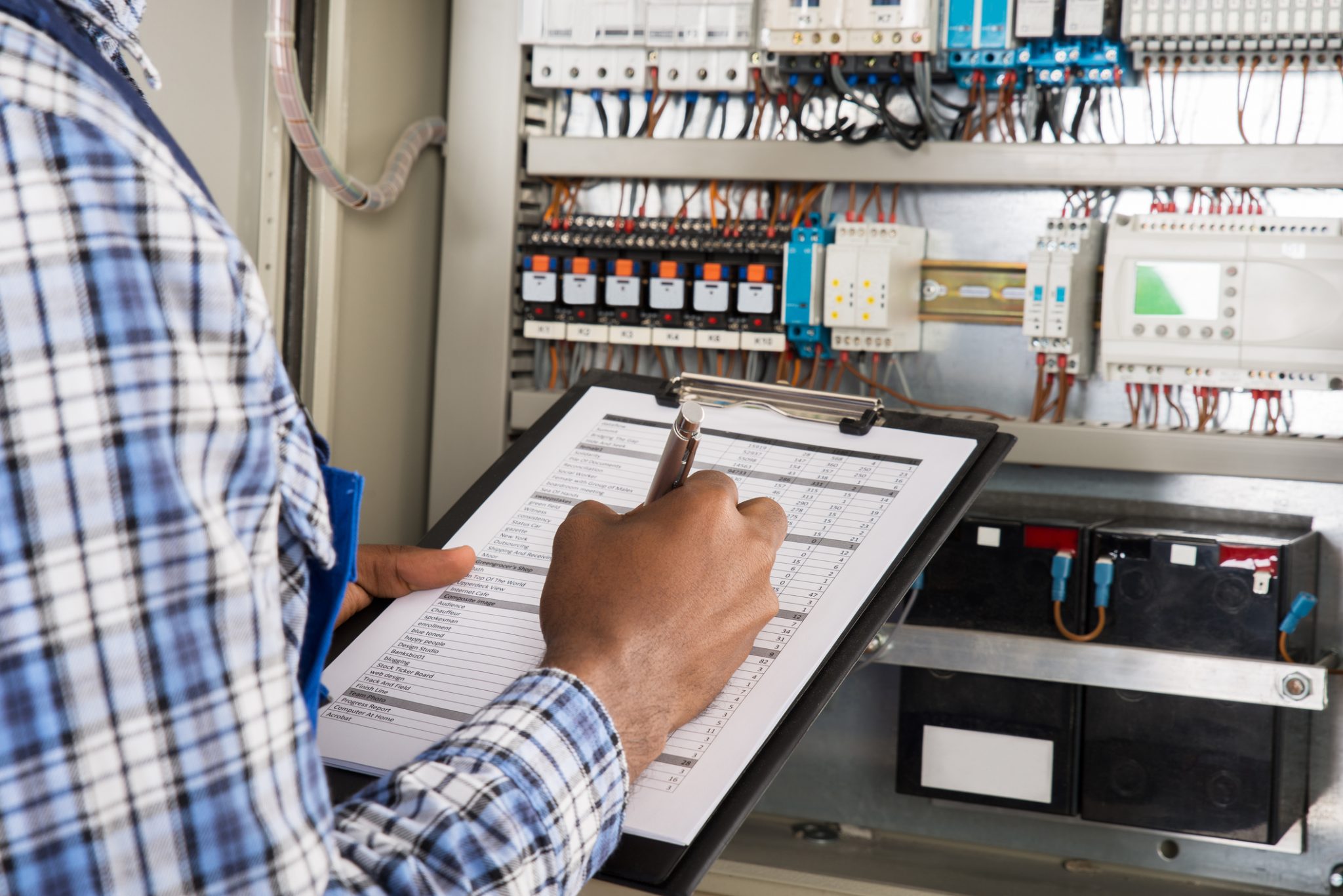
If you manage or own a commercial building, there’s a good chance you’ve heard the term NFPA 70B lately. It may have come up in a conversation with your insurance provider, your facilities team, or a contractor. Whatever the source, one thing is clear: this is no longer something you can put on the back burner.
Here’s a plain-English breakdown of what NFPA 70B is, what changed in 2023, and what it means for your building.
NFPA 70B at a Glance
- NFPA 70B is the national standard for electrical equipment maintenance in commercial buildings.
- As of 2023, it’s mandatory—not just a recommendation.
- Non-compliance opens the door to OSHA fines, insurance gaps, and equipment failures.
- Requirements include a documented maintenance program, annual IR inspections, and thorough recordkeeping.
- Mac Electric can assess your systems and build a compliant plan for your facility.
What Is NFPA 70B?
NFPA 70B is a standard published by the National Fire Protection Association that covers electrical equipment maintenance for commercial, industrial, and institutional buildings. It lays out how electrical systems should be inspected, tested, cleaned, and serviced to keep them operating safely and reliably.
For decades, NFPA 70B existed as a set of recommended practices. Helpful guidance, sure, but following it was optional. Building owners could choose their own maintenance schedules, or skip them altogether, without much consequence.
That changed in 2023.
Is NFPA 70B Mandatory Now?
Yes, and the 2023 edition of NFPA 70B made a significant shift: it moved from a “recommended practice” to a formal standard. The language changed from what electrical maintenance programs “should” do to what they “shall” do, and that distinction carries real weight.
Because NFPA 70B is now an enforceable standard, OSHA can reference it when issuing citations. As of 2024, serious OSHA violations carry penalties up to $16,131 per violation, and willful or repeated violations can reach $161,323. That’s a steep price for deferred maintenance.
This applies broadly—office buildings, retail centers, data centers, hospitals, schools, and large multifamily complexes all fall within its scope. If your building has a centralized electrical system, NFPA 70B applies to you.
What Does NFPA 70B Actually Require?
The 2023 update introduced a condition-based maintenance (CBM) model. Rather than running on a one-size-fits-all schedule, maintenance intervals are now tied to the actual condition of your electrical equipment. Each system is assessed and assigned a condition rating, which then determines how often it needs to be serviced.
Here’s what the standard requires at a high level:
- An Electrical Maintenance Program (EMP): A documented, structured plan outlining your electrical systems, their conditions, who is responsible for maintaining them, and when. This isn’t a general checklist; it needs to be customized to your specific building.
- Annual infrared (IR) inspections: Thermographic scanning of energized electrical equipment is now required on an annual basis. These scans detect heat anomalies that signal loose connections, overloaded circuits, or failing components before they become fires or failures.
- Regular visual inspections: Depending on equipment condition, visual checks are required every six to twelve months, covering everything from insulation integrity to legible circuit breaker markings.
- Mechanical and electrical testing: This includes verifying torque on hardware connections, testing circuit breakers, and confirming that protective devices are functioning properly.
- Documentation: Every inspection, test, and service event needs to be recorded. If an incident occurs or OSHA comes knocking, your documentation is your evidence of due diligence.
Why This Matters Beyond Compliance
Compliance alone is a strong enough reason to take NFPA 70B seriously, but the case goes further than avoiding fines.
Safety
Poorly maintained electrical systems are a leading cause of fires and workplace injuries. Equipment that fails without warning doesn’t just damage property; it puts people at risk. Consistent maintenance catches problems early, before they escalate.
Reliability
Unplanned outages cost commercial facilities significant money, both in lost productivity and emergency repairs. A proactive maintenance program keeps systems running and extends the lifespan of your equipment.
Insurance
Insurers are paying attention. Many risk management frameworks and commercial property insurers now expect facilities to follow NFPA 70B as a baseline standard. Non-compliance can affect your coverage, your premiums, or your ability to make a claim after an electrical incident.
Asset protection
Electrical systems are a significant investment. Regular maintenance protects that investment and defers costly replacements.
NFPA 70B Compliance Doesn’t Have to Be Complicated
The key to getting started is finding the right partner. That’s where Mac Electric comes in. We work with commercial property owners and facility managers across the Colorado Front Range to make NFPA 70B compliance straightforward and manageable from the initial assessment to long-term maintenance support.
We start with a compliance assessment of your current electrical systems, equipment condition, and documentation to identify where your gaps are and what needs attention first. From there, we build a maintenance plan around your facility’s priorities, operating schedule, and compliance needs, keeping it current as your building and equipment evolve.
Get Your Commercial Building NFPA 70B Compliant with Mac Electric
Mac Electric has been serving commercial properties across the Colorado Front Range for more than 25 years. Our licensed electricians understand the compliance landscape and bring a value-engineered approach to every project, so you’re not just meeting the standard, you’re building a stronger, more reliable electrical system in the process.
Ready to reduce liability exposure and get a clear picture of where your building stands? Talk with an NFPA 70B specialist at Mac Electric today.